
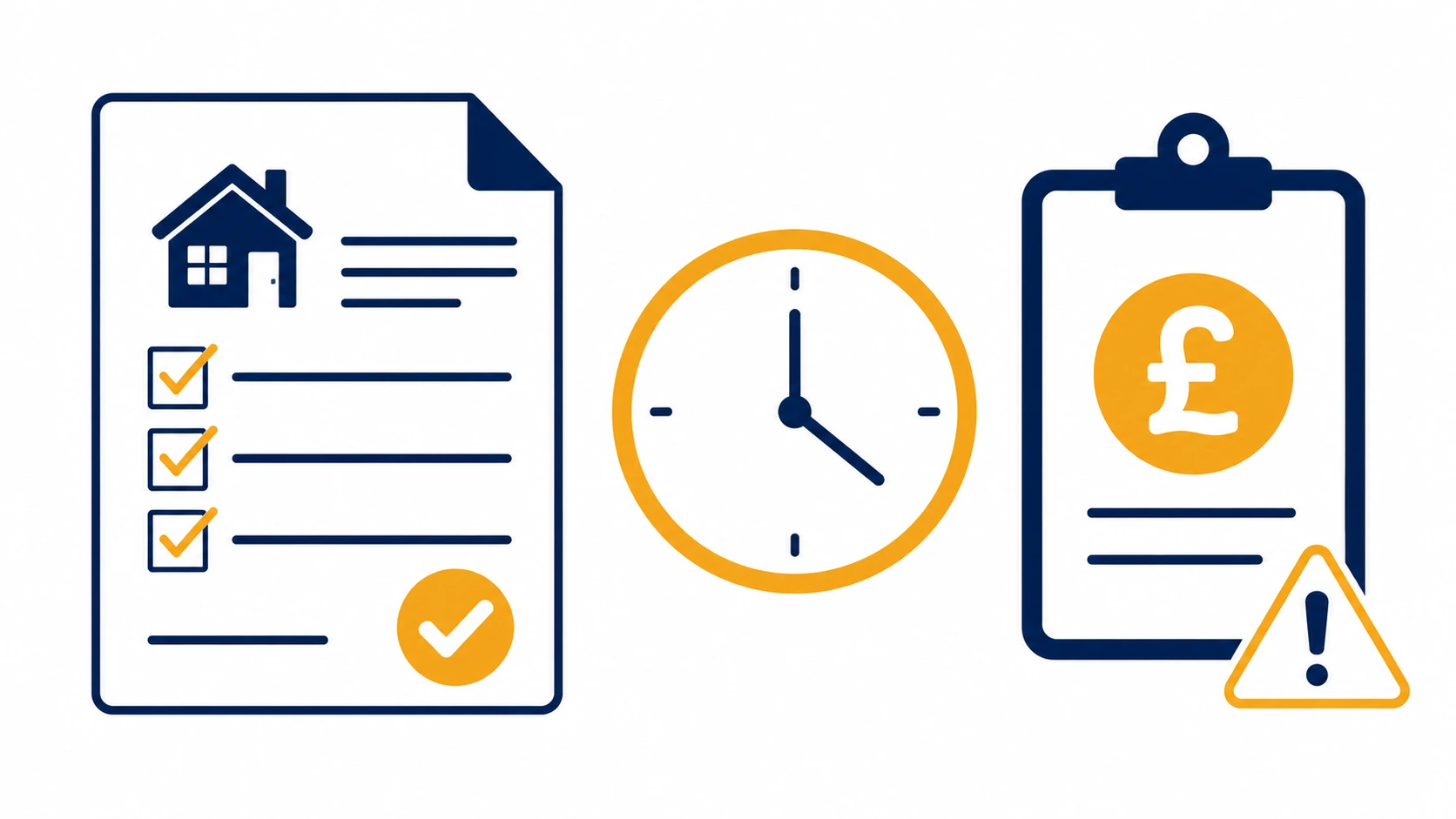
Miss a deadline on a householder application, and you get 12 weeks to appeal. Miss the same kind of deadline on almost any other planning application, and you get six months. That single difference is worth understanding before anything else, because it shapes how much room for error the whole householder process actually gives you, and it’s rarely mentioned alongside the £548 fee figure most people go looking for.
What actually counts as householder
The category covers development that is attached to, or within the grounds of, a single dwellinghouse. Not a flat. Not a maisonette. Not a building that’s already been split into separate units. Extensions, loft conversions, garages, and most boundary works fall inside it, provided the work doesn’t create a separate, independently occupiable unit alongside the existing house.
Step outside any part of that definition and the application moves into full planning territory instead, with a different fee structure entirely, calculated by dwelling count or floorspace rather than the flat £548 rate.
The fee itself
£548, as of 1 April 2026. One number, regardless of whether the project is a small single-storey rear extension or a substantial two-storey side addition. The flat rate exists because the fee reflects the administrative cost of assessing a householder-scale application, not the physical size of what’s being built.
Why the 12-week appeal window matters more than it looks
The Planning Inspectorate runs a dedicated householder appeals service, built specifically to be faster than the standard appeals process used for every other application type. That speed comes with a tradeoff: a much shorter window to actually use it. Miss the 12 weeks, and there’s no extension available, no second chance through the same route. The only way back is a fresh application, which usually means paying the £548 fee again.
What changed in April 2026
New Planning Inspectorate procedures introduced from 1 April 2026 tightened this further. Appeals are now decided almost entirely on the material submitted with the original application. New evidence, revised drawings, or fresh arguments introduced at the appeal stage are generally not considered. Previously, applicants had more scope to strengthen a weak application once it reached appeal. That flexibility has been significantly reduced, which means the £548 needs to buy a genuinely complete submission the first time, not a rough draft you plan to refine later if challenged.
Refusal doesn’t come with your money back
Worth stating plainly, because it catches people off guard: if a householder application is refused, the £548 fee stays with the council. You’re paying for the application to be determined, not for a particular outcome. Choosing to appeal costs nothing further, but the original fee is gone either way.
The 28-day rule that can cost you 20% for nothing
Before an application is even assessed on its merits, it has to pass validation, a check that every required document and piece of information has been submitted correctly. If the council flags something missing and you don’t resolve it within 28 days, the application is treated as withdrawn. Many councils then apply an administrative charge, typically around 20% of the fee, to cover the officer time already spent. On a £548 application, that’s roughly £110 for a submission that was never actually assessed.
Why this happens more often than people expect
It’s rarely a case of forgetting something obvious. More often it’s a missing site plan at the correct scale, an unclear boundary line, or supporting information that doesn’t quite match what the council’s local validation checklist requires (checklists vary slightly by council, which adds another layer people don’t anticipate). Getting the validation requirements right before submission is the single most reliable way to avoid this charge entirely.
How householder compares to the categories around it
- A full application is required for new dwellings or anything affecting a flat rather than a single house; the fee scales with dwelling count or floorspace instead of staying flat
- An outline application establishes the principle of development before detailed drawings are prepared, charged per 0.1 hectare of site area
- Prior Approval offers a lighter-touch, faster process for specific permitted development categories, each with its own separate fixed fee
If a project sits close to the boundary between householder and one of these other categories, it’s worth confirming which one genuinely applies before submitting, since the fee, the appeal timeline, and the validation requirements all differ.
A quick way to think about the £548
It isn’t just covering “an extension.” It’s covering the specific, defined legal category your project falls into, with its own appeal rules, its own validation standards, and its own consequences for getting the submission wrong the first time. Treating it as a simple flat fee misses most of what actually determines whether that fee ends up well spent or wasted.
For the official current fee schedule, see Gov.uk: Fees for planning applications. For guidance on appealing a householder decision, see Gov.uk: Appeal a householder planning decision.
Not sure whether your project counts as householder or needs a different application type? Use the calculator to confirm.
2 thoughts on “Householder Planning Application Fee Explained 2026”